

Rochester and Monroe County
Drum Lessons in Rochester, NY
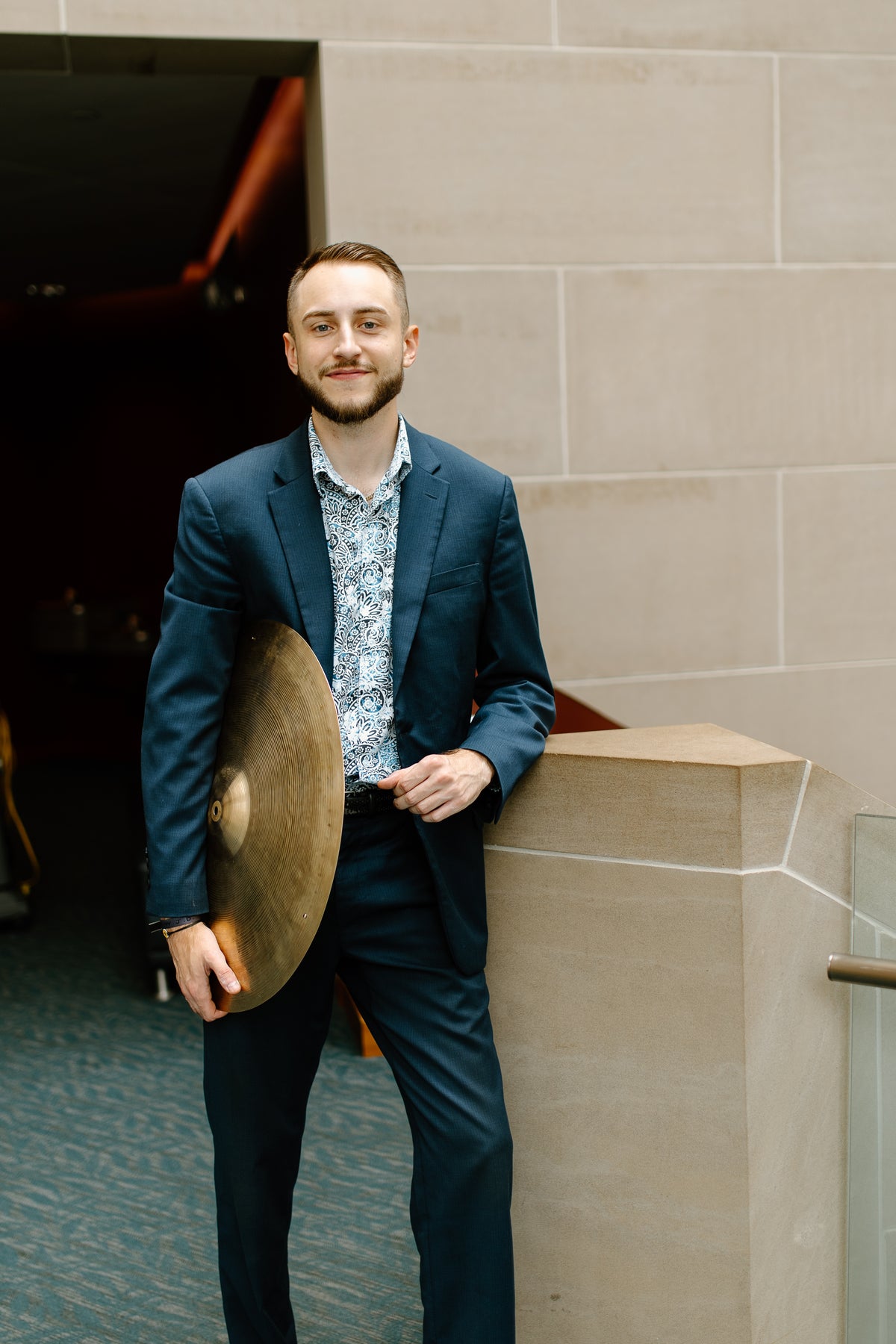
Ryan Barski teaches drum set in Rochester, from a four year old's first pair of sticks to an adult who wants to finally learn brushes.
Lessons happen at his private studio, online, or in your home anywhere in Monroe County, and the first consultation is free. Parents are always welcome to sit in.
Rated 5.0 on Google. Ryan Barski is an Eastman School of Music graduate who has taught privately since 2017 and has taught drum masterclasses in Taiwan. He brings the same coaching to every private lesson: real technique, clear goals and a plan from the first month. The free consultation takes 30 minutes, and if the first lesson isn't a fit, you don't pay for it.
Free. No commitment.
Ryan is performing in Taiwan with Leon Hsu from October 14 to 28. Free phone consultations stay open October 16 to 25, evenings Eastern time.

- Eastman School of Music, BM 2022 and MM 2024
- Teaching privately since 2017
- 5.0 on Google
- If the first lesson isn't a fit, you don't pay for it.
- Ages4 and up
- WhereStudio, online, or in your home
- StylesRock, funk, Latin and jazz
- ReadingSnare, concert percussion, big band
- All-County, Area All-State, All-State on snare drum, then Eastman
-
Ryan has been so much more than a drum teacher to our 16-year-old son. He encourages him to challenge himself, work hard, believe in himself, and most importantly, enjoy the journey. We have watched our son grow not only as a drummer, but also in his confidence and as a young man. He is an exceptional teacher, an amazing mentor, and an even better person.
Read the full story Show less
Ryan has been so much more than a drum teacher to our 16-year-old son. He has truly become a mentor, a positive influence, and honestly, a part of our family.
From the beginning, Ryan has had a special way of connecting with our son. He encourages him to challenge himself, work hard, believe in himself, and most importantly, enjoy the journey. We have watched our son grow not only as a drummer, but also in his confidence and as a young man.
What makes Ryan so special is that he genuinely cares about his students beyond the music. He has been there to encourage, support, and guide our son, and that means more to our family than we can put into words.
Over time, Ryan has become more than someone we see for drum lessons. He has become someone we consider part of our family. We are incredibly grateful for the relationship he has built with our son and for the positive impact he has had on all of us.
We feel truly fortunate to have Ryan in our lives and could not recommend him highly enough. He is an exceptional teacher, an amazing mentor, and an even better person.
Quinn's momparent of a drum student, 2 years
Starting out, ages four and up
A first lesson is usually grip, a single stroke, and counting out loud. Ryan starts students on matched grip and adds traditional when a student wants it or when concert snare makes it useful. Beginners spend more time on a practice pad than on a kit, because the pad is where stroke height and rebound actually get fixed. A pad and a pair of 5A sticks covers the first few months, and he will tell you when it stops being enough.

Coordination and independence
Coordination and independence is the engine under everything else, and it is the part most self taught drummers skip. We work limb by limb: hands alone, feet alone, then hands against a steady quarter note in the bass drum, then the reverse. Ryan uses written exercises where the right hand holds a pattern and the left fills the gaps, started slow enough that you never practise a mistake. Independence is not a talent. It is a set of habits built one tempo at a time against a metronome, and he will show you how to practise it so it stays learned.
Rock, funk, Latin and jazz
Once the hands and feet cooperate we play real music.
- Rock comes first, because an eighth note pulse is the easiest place to hear your own time: backbeats that sit still, fills that land where they should, and playing quietly without losing the groove.
- Funk adds sixteenth note subdivision, ghost notes and the open hi hat.
- Latin covers bossa nova and son clave, where the whole skill is repeating a pattern without rushing it.
- Jazz starts with the ride cymbal pattern and the hi hat on two and four, which feels wrong to every rock drummer for about a month and then does not.

Reading: snare drum, concert percussion and big band
Reading is a separate skill from playing and Ryan teaches it as one. He teaches snare drum and drum set.
- We work through snare drum reading for rhythm and for the rudiments in context, so rolls, flams, drags and paradiddles turn up inside real parts rather than as a list to memorise.
- School band students need concert percussion alongside the kit, so we cover bass drum, crash cymbals, tambourine and triangle technique too, because those are the parts you actually get handed.
- Big band reading is its own language and it catches people out. We read charts and work on what only comes up there: setting up figures in the horns, kicking a shout chorus, following a road map of repeats and codas, and knowing when the chart wants time and when it wants exactly what is written.
Jazz drumming
For students going further, jazz is where most of Ryan's own playing lives. We work on comping behind a soloist with the left hand and bass drum, trading fours and eights so the phrase length survives, and brushes, which almost nobody teaches and every working drummer eventually needs. Soloing over the form comes last: playing a solo that has a shape and ends where the music ends, rather than stopping when you run out of ideas.
Transcription and odd meters
Transcription is how a drummer's vocabulary actually grows. We take a recording, learn a phrase off it by ear, write it down, then use it somewhere else so it becomes yours instead of a party trick. Odd meters come once the common ones are solid: five four, seven eight and jazz in three, counted in groupings rather than counted up to seven, so the pulse stays musical.
Keep reading
Common questions
Does my child need a drum set at home?
Not to start. A practice pad and a pair of sticks will carry the first few months, and a pad is where grip, stroke height and rebound get fixed anyway. When a kit starts to matter Ryan will say so, and we can talk about what to buy and what to avoid. An electronic kit with headphones solves most apartment and late evening problems.
How young is too young to start?
Ryan teaches from age four. With very young students a lesson is short and built on rhythm, counting out loud and copying patterns back to him, and we spend most of it away from a full kit. Reading comes in when the hands and the attention are both ready, which varies a lot from child to child.
I played in high school and stopped. Can I come back to it?
Yes, and returning players usually keep more than they expect. What has faded is stroke control and time, and both come back quickly with a plan. Adults often do better on a lesson every other week with real practice in between than on a weekly slot they have to rush to.
Do you teach snare drum for school band, or only drum set?
Both. Keyboard percussion on marimba, xylophone, vibraphone and bells is outside what Ryan teaches.
How much do drum lessons cost in Rochester?
A single drum lesson is $50 for 30 minutes, $75 for 45 and $100 for 60. Packages lower the rate: the Flex Pack is $46 per 30-minute lesson, Monthly is $45, and the Full Year is $42.50. In-home lessons add $15 within Monroe County, online lessons cost the same as the studio, and the first consultation is free.
Where do lessons happen?
At Ryan's private studio on the east side of Rochester, about fifteen minutes from downtown, in your home anywhere in Monroe County, or online. He sends the studio address when you schedule the consultation.
What happens at the free consultation?
It is about thirty minutes, free, with no obligation. You talk about what you want to play, Ryan hears where you are, and together you agree on a plan and a lesson length. It can be at the studio or by phone.
Can you help with NYSSMA or All-County auditions?
Yes. Ryan prepares drum set and snare students for NYSSMA solo festival, All-County, Area All-State and All-State, and he went through each of those himself.
Ryan teaches in-home lessons anywhere in Monroe County, including Rochester, Brighton, Pittsford, Penfield, Fairport, Webster, Irondequoit, Greece, Henrietta, Gates, Chili, Spencerport, Hilton and Brockport.
Ready to start
Book the free consultation and we will talk about where you are and what you want to play. If you would rather talk first, call or text 585-739-3124.